SKY ICT PUBLIC COMPANY LIMITEDSET: SKY🇹🇭 TH

CG Policy · 2025

Corporate Governance Policy

Has a Corporate Governance Policy

Yes

Policy Description

The Board of Directors recognizes the importance of good corporate governance, conducting business ethically, respecting rights, and being responsible towards society, the environment, and various stakeholders. Having an efficient, transparent, and auditable management system will help build trust and confidence among all involved parties. Therefore, the Company has adopted the Good Corporate Governance Principles for Listed Companies (2017), as prescribed by the Stock Exchange of Thailand, to serve as a guideline for the Company's business operations, ensuring a sound management system and fostering competitiveness, which will lead to the Company's sustainable growth. Furthermore, the Board of Directors firmly believes that adherence to the principles of good governance, ethics, and morality in business operations will enhance long-term value for the enterprise. The Board is also committed to developing and elevating corporate governance to comply with criteria covering 8 principles, including the annual review of policies and practices. The Good Corporate Governance and Sustainability Committee will consider and propose these to the Board of Directors for approval, to ensure suitability with changes that may arise from business operations, environmental conditions, circumstances, or laws. Compliance with policies is regularly monitored and communicated to employees and the public through the Company's website under the "Corporate Governance" section.

Policy Document Link

https://cms.skyict.co.th/wp-content/uploads/2025/12/SKY02-01-_-Corporate-Governance-Policy-_-13.11.25.pdf

Policy & Practices — Board of Directors

Has Policy & Guidelines for the Board

Yes

Board Guidelines

GuidelineOther — Please SpecifyDetailDocument LinkPage Number in Report
Nomination of Directors

The Board of Directors should oversee that the nomination and selection of directors follow a transparent and clear process to ensure the appointment of a Board of Directors whose qualifications align with the prescribed composition.

  1. The Board of Directors should establish a Nomination Committee, the majority of whose members and the chairman should be independent directors.

  2. The Nomination Committee should hold meetings to consider the criteria and procedures for nominating individuals to ensure the appointment of directors with qualifications that will result in a Board with an appropriate composition of knowledge and expertise, and to review the profiles of such individuals, and submit recommendations to the Board of Directors before presenting them to the shareholders' meeting for appointment as directors. Furthermore, shareholders should receive sufficient information about the nominated individuals to aid their decision-making.

  3. The Nomination Committee should review the criteria and procedures for director nomination to propose recommendations to the Board of Directors before the nomination of directors whose terms are expiring. In cases where the Nomination Committee proposes the re-nomination of an existing director, the performance of such director should also be taken into consideration.

  4. In cases where the Board of Directors has appointed any individual as an advisor to the Nomination Committee, information regarding such advisor should be disclosed in the annual report, including their independence or absence of conflicts of interest.

https://cms.skyict.co.th/wp-content/uploads/2025/12/SKY02-01-_-Corporate-Governance-Policy-_-13.11.25.pdf5
Determination of Director Remuneration

When proposing director remuneration for shareholder approval, the Board of Directors should ensure that the structure and rates of remuneration are appropriate for the responsibilities and incentivize the Board to lead the organization in achieving both short-term and long-term goals.

  1. The Board of Directors should establish a Remuneration Committee, with the majority of its members and the chairman being independent directors, to consider policies and criteria for determining remuneration.

  2. Director remuneration should be consistent with the company's long-term strategies and goals, experience, duties, scope of roles and responsibilities, as well as the expected benefits from each director.

  3. The Nomination and Remuneration Committee is responsible for considering appropriate criteria and forms of director remuneration, including monetary and non-monetary forms, fixed remuneration, and performance-based remuneration linked to the value the company creates for shareholders. However, it should not be excessively high to the point of solely focusing on short-term performance. The committee proposes this to the Board of Directors for approval before submitting it to the shareholders' meeting for consideration and approval.

  4. The Board of Directors should disclose the policy and criteria for determining director remuneration, reflecting each individual's duties and responsibilities, as well as the form and amount of remuneration.

  5. In the event that the Board of Directors appoints any individual as an advisor to the Nomination and Remuneration Committee, information about such advisor, including their independence or absence of conflicts of interest, should be disclosed in the annual report.

https://cms.skyict.co.th/wp-content/uploads/2025/12/SKY02-01-_-Corporate-Governance-Policy-_-13.11.25.pdf6
Independence of the Board of Directors from the Management

The Board of Directors should be responsible for defining and reviewing the Board's structure, including its size, composition, and the appropriate and necessary proportion of independent directors to guide the organization towards its stated objectives and key goals.

  1. A skills matrix for directors should be prepared to ensure that the Board possesses diverse and appropriate qualifications, enabling it to understand and respond to stakeholder needs. Additionally, there must be at least one non-executive director with experience in the company's core business or industry to achieve the organization's primary objectives and goals.

  2. The Board of Directors should consider an appropriate number of directors who can perform their duties effectively, with a minimum of 5 directors and a maximum of 12 directors, depending on the size, type, and complexity of the business.

  3. The Board of Directors should have an appropriate balance between executive and non-executive directors, reflecting a proper balance of power. The number and qualifications of independent directors should comply with the criteria set by the Office of the Securities and Exchange Commission and the Stock Exchange of Thailand. Furthermore, the Board should ensure that independent directors can work effectively with the entire Board and express their opinions freely.

  4. The Board of Directors should disclose its policy on establishing a diverse Board composition and provide director information such as age, gender, educational background, experience, shareholding proportion, years of service as a director, and directorships in other listed companies, in the annual report and on the company's website.

https://cms.skyict.co.th/wp-content/uploads/2025/12/SKY02-01-_-Corporate-Governance-Policy-_-13.11.25.pdf4-5
Director Development

The Board of Directors should oversee that the Board and each director possess knowledge and understanding of their roles and responsibilities, the nature of the business, and relevant business laws, as well as support all directors in continuously enhancing their skills and knowledge for performing their duties.

  1. The Board of Directors should ensure that newly appointed directors receive an introduction and useful information for performing their duties, including an understanding of the objectives, key goals, vision, mission, organizational values, as well as the nature of the business and its operational guidelines.

  2. The Board of Directors should ensure that directors receive continuous necessary training and knowledge development.

  3. The Board of Directors should have an understanding of laws, regulations, standards, risks, and the business environment, and should regularly receive updated information.

  4. The Board of Directors should disclose information regarding the continuous training and development of the Board in the annual report.

https://cms.skyict.co.th/wp-content/uploads/2025/12/SKY02-01-_-Corporate-Governance-Policy-_-13.11.25.pdf8
Board Performance Evaluation

The Board should arrange for an annual performance evaluation of the Board, its sub-committees, and individual directors. The evaluation results should also be used for the continuous development of their duties.

  1. The Board and its sub-committees should evaluate their performance at least once a year to allow the Board to collectively consider achievements and issues for future improvement. Criteria for comparing performance should be established systematically.

  2. Performance evaluations should be conducted for both the collective board and individual members. At a minimum, self-evaluation should be employed, or the Board may consider using cross-evaluation as well. The criteria, procedures, and overall evaluation results should be disclosed in the annual report.

  3. The Board may consider engaging external consultants to assist in setting guidelines and recommending issues for the Board's performance evaluation at least every three years, and disclose such arrangements in the annual report.

  4. The results of the board's evaluation should be used to consider the appropriateness of the board's composition.

https://cms.skyict.co.th/wp-content/uploads/2025/12/SKY02-01-_-Corporate-Governance-Policy-_-13.11.25.pdf7-8
Corporate Governance of Subsidiaries and Associated Companies

The Board of Directors is responsible for overseeing the establishment of frameworks and mechanisms for supervising the policies and operations of subsidiaries and other significantly invested entities, at a level appropriate for each entity. This includes ensuring that subsidiaries and other invested entities have a correct and consistent understanding.

  1. The Board of Directors is responsible for considering and establishing policies for the supervision of subsidiaries, which include:

    1. The appointment of individuals as directors, executives, or controlling persons in subsidiaries, to be specified in writing. Generally, the Board of Directors should make such appointments, unless the company is a small entity under the governance policy of the business, in which case the Board may delegate the appointment to the Chief Executive Officer.

    2. Define the scope of duties and responsibilities of individuals representing the company as per item (1) and ensure that the company's representatives oversee compliance with the subsidiary's policies.

    3. Appropriate and sufficiently robust internal control systems for subsidiaries, and ensuring that all transactions comply with relevant laws and regulations.

    4. Disclosure of financial position and operating results, related party transactions, acquisition or disposal of assets, other significant transactions, capital increase, capital reduction, dissolution of subsidiaries, etc.

In cases of significant investment in other entities, such as holding voting shares from 20% but not exceeding 50%, and where the investment amount or potential additional investment is significant to the company, the Board of Directors should, if necessary, ensure the preparation of a Shareholders’ Agreement or other agreements to clarify management authority, participation in important decision-making, and performance monitoring. This is to ensure that the information can be used for preparing the company's financial statements in accordance with standards and timelines.

https://cms.skyict.co.th/wp-content/uploads/2025/12/SKY02-01-_-Corporate-Governance-Policy-_-13.11.25.pdf7
Other guidelines regarding the board of directorsPromoting innovation and responsible business conduct

The Board of Directors should monitor and ensure that management conducts business with social and environmental responsibility, and that this is reflected in the operational plan to ensure that all parties within the organization operate in alignment with the objectives, main goals, and strategies of the business.


The Board of Directors should ensure that mechanisms are in place to guarantee that the business operates ethically, with social and environmental responsibility, and without infringing upon the rights of stakeholders, in order to guide all parts of the organization towards achieving sustainable objectives and main goals. This may involve establishing policies or guidelines that should at least cover the following matters:

  1. Responsibility towards employees and workers, by complying with relevant laws and standards and treating employees and workers fairly and respecting human rights, including setting fair compensation and other benefits, providing welfare no less than legally required or more as appropriate, ensuring occupational health and safety, providing training, developing potential, and promoting career advancement, as well as offering opportunities for employees to develop work skills in other areas.

  2. Responsibility towards customers, by complying with relevant laws and standards, and considering health, safety, fairness, customer data protection, after-sales service throughout the product and service lifecycle, monitoring and measuring customer satisfaction for product and service development and improvement, as well as ensuring that advertising, public relations, and sales promotions are conducted responsibly, do not cause misunderstanding, or exploit customer misunderstanding.

  3. Responsibility towards business partners, by having fair procurement processes and contract terms or agreements, providing knowledge, developing potential, and elevating production and service capabilities to meet standards, clarifying and ensuring that partners respect human rights and treat their own labor fairly, taking responsibility for society and the environment, as well as monitoring, inspecting, and evaluating partners to develop sustainable business operations together.

  4. Responsibility towards the community, by applying business knowledge and experience to develop projects that can concretely benefit the community, with long-term monitoring and measurement of progress and success.

  5. Environmental responsibility, by preventing, reducing, managing, and ensuring that the company does not create or cause negative impacts on the environment, which includes the use of raw materials, energy consumption (for production, transportation, or in offices), water usage, use of renewable resources, care and restoration of biodiversity affected by business operations, discharge and management of waste generated from business operations, greenhouse gas emissions, etc.

  6. Fair competition, by conducting business openly and transparently and not creating unfair competitive advantages.

  7. Anti-corruption and bribery, by complying with relevant laws and standards, and requiring the company to have and publicly announce an anti-corruption and bribery policy.

https://cms.skyict.co.th/wp-content/uploads/2025/12/SKY02-01-_-Corporate-Governance-Policy-_-13.11.25.pdf11-12
Other guidelines regarding the board of directorsMaintain an appropriate risk management and internal control system.

The Board of Directors should oversee to ensure that the company has an effective risk management and internal control system to achieve its objectives, and that it operates in compliance with relevant laws and standards.

  1. The Board of Directors should understand the significant risks of the enterprise and approve acceptable risks.

  2. The Board of Directors should consider and approve a risk management policy that aligns with the enterprise's objectives, key goals, strategies, and acceptable risk levels, to serve as a framework for risk management operations for everyone in the organization, ensuring a unified direction. Furthermore, the Board should prioritize early warning signals and ensure that the risk management policy is regularly reviewed.

  3. The Board of Directors should ensure that the company identifies risks by considering both external and internal factors that may prevent the company from achieving its stated objectives.

  4. The Board of Directors should ensure that the company assesses the impact and likelihood of identified risks to prioritize them and implement appropriate risk management methods.

  5. The Board of Directors may assign the Risk Management Committee or the Audit Committee to review items 1-4 before submitting them for the Board's consideration, as appropriate for the business.


  6. The Board of Directors should regularly monitor and evaluate the effectiveness of risk management.

  7. The Board of Directors is responsible for ensuring that the enterprise conducts its business in compliance with relevant laws and standards, both domestically and internationally.

  8. In cases where the company has subsidiaries or other entities in which it has made significant investments, the Board of Directors should incorporate the results of the internal control and risk management system assessments into its considerations as per items 1-7.

https://cms.skyict.co.th/wp-content/uploads/2025/12/SKY02-01-_-Corporate-Governance-Policy-_-13.11.25.pdf12-13
Other guidelines regarding the board of directorsOversee and manage conflicts of interest

The Board of Directors should monitor, oversee, and manage potential conflicts of interest that may arise between the company and management, the Board, or shareholders, including preventing the improper use of the company's assets, information, and opportunities, and engaging in inappropriate transactions with related parties.

  1. The Board of Directors should oversee the establishment of an information security system, which includes defining policies and practices for confidentiality, integrity, and availability of information, as well as managing market-sensitive information. Furthermore, the Board of Directors should ensure that directors, senior executives, employees, and relevant external parties, such as legal advisors and financial advisors, comply with the information security system.

  2. The Board of Directors should ensure the management and monitoring of transactions that may involve conflicts of interest, as well as ensure guidelines and practices are in place for such transactions to comply with operational procedures and disclosure requirements as stipulated by law, and to primarily serve the best interests of the company and its shareholders as a whole. Interested parties should not participate in decision-making.

  3. The Board of Directors should require directors to report their interests at least before the consideration of Board meeting agendas, and these should be recorded in the Board meeting minutes. The Board of Directors should ensure that directors with significant interests, in a manner that may prevent them from expressing independent opinions, abstain from participating in the discussion of that agenda item.

https://cms.skyict.co.th/wp-content/uploads/2025/12/SKY02-01-_-Corporate-Governance-Policy-_-13.11.25.pdf14
Other guidelines regarding the board of directorsMaintain financial credibility and information disclosure

The Board of Directors is responsible for ensuring that the system for preparing financial reports and disclosing important information is accurate, sufficient, timely, and in compliance with relevant rules, standards, and practices.

  1. The Board of Directors should ensure that personnel involved in the preparation and disclosure of information possess appropriate knowledge, skills, and experience for their responsibilities, and are sufficient in number. Such personnel include the Chief Financial Officer, accountants, internal auditors, company secretary, and investor relations officers.

  2. When approving information disclosure, the Board of Directors should consider relevant factors. In the case of financial reports, at least the following factors should also be considered:

    1. Results of the assessment of the adequacy of the internal control system

    2. Auditor's opinion in the financial report, and the auditor's observations regarding the internal control system, as well as any auditor's observations communicated through other channels (if any).

    3. Opinion of the Audit Committee

    4. Alignment with the company's objectives, key goals, strategies, and policies

  3. The Board of Directors should ensure that information disclosure, including financial statements, annual reports, and Form 56-1, adequately reflects the financial position and operating results. Furthermore, the Board should encourage the company to prepare Management Discussion and Analysis (MD&A) to accompany quarterly financial statement disclosures. This is to enable investors to receive information and better understand the changes occurring in the company's financial position and operating results each quarter, beyond just the numerical data in the financial statements.

  4. In cases where any information disclosure specifically concerns a particular director, that director should ensure the completeness of their own disclosure.

https://cms.skyict.co.th/wp-content/uploads/2025/12/SKY02-01-_-Corporate-Governance-Policy-_-13.11.25.pdf15
Other guidelines regarding the board of directorsPromote shareholder engagement and communication

The Board of Directors should ensure that shareholders participate in decision-making on important company matters.

  1. Ensure that important matters, including issues stipulated by law and issues that may affect the company's operational direction, are considered and/or approved by shareholders. Such important matters should be included as agenda items for the shareholders' meeting.

  2. Support shareholder participation, such as:

    1. Establishing criteria for minority shareholders to propose additional agenda items in advance of the shareholders' meeting. The Board of Directors should consider including the matters proposed by shareholders as agenda items. Should the Board of Directors reject a matter proposed by shareholders for inclusion as an agenda item, the Board must inform the shareholders' meeting of the reasons.

    2. Criteria for minority shareholders to nominate individuals for directorships.

The Board of Directors should ensure that such criteria are disclosed to shareholders in advance.

  1. Ensure that the notice of the shareholders' meeting contains accurate, complete, and sufficient information for shareholders to exercise their rights.

  2. Ensure that the notice of the shareholders' meeting, along with related documents, is dispatched and published on the company's website at least 28 days prior to the meeting date.

  3. The Board of Directors should provide an opportunity for shareholders to submit questions in advance of the meeting, by establishing criteria for submitting advance questions and publishing such criteria on the company's website.

  4. The notice of the shareholders' meeting and related documents should be prepared in full English and published alongside the Thai version.

https://cms.skyict.co.th/wp-content/uploads/2025/12/SKY02-01-_-Corporate-Governance-Policy-_-13.11.25.pdf17

Policy & Practices — Shareholders and Stakeholders

Introduction

The Company prioritizes the rights of all stakeholder groups, whether internal stakeholders, such as the Company's executives and employees, or external stakeholders, such as creditors and customers. The Company recognizes that the support and feedback from all stakeholder groups are beneficial for its operations and business development. Therefore, the Company will comply with relevant laws and regulations to ensure that the rights of these stakeholders are well protected. Furthermore, in conducting its business, the Company considers the rights of all parties, in accordance with the following guidelines.

Has Policy & Guidelines for Shareholders and Stakeholders

Yes

Shareholder & Stakeholder Guidelines

GuidelineDetail
Shareholder

The Company is committed to fostering growth to ensure shareholders receive good returns, and respects shareholders' rights to information. Information will be disclosed for evaluating the Company's management, and the Company's operating results and financial position will be accurately presented. The Company has a policy of accurate accounting practices and adheres to relevant accounting standards and laws, which are subject to review by the Company's internal auditors, audit committee, and independent auditors.

Employee

The Company recognizes that employees are one of the key resources essential for the organization's growth and development. The Company will ensure a safe working environment for the lives of its employees, as well as the safety of the Company's and employees' assets at all times. Furthermore, the Company will strictly adhere to all laws and regulations related to employees, including appointments, transfers, as well as rewards and disciplinary actions. The Company will conduct these matters with equality, integrity, and fairness. Additionally, the Company will promote the comprehensive and continuous development of employees' knowledge and skills and provide fair compensation to employees.

Customer

The company is committed to building customer satisfaction and confidence, caring for and being responsible towards customers. Customers must receive good, quality products/services at appropriate price levels, as well as strictly adhering to the terms and agreements with customers, and maintaining good and sustainable relationships with customers. including not utilizing customer data for the benefit of the company and related parties.

Business competitor

The Company shall treat its business competitors within the framework of fair and honest competition, in compliance with legal provisions. Furthermore, it shall not seek confidential information from business competitors through dishonest or inappropriate methods, nor shall it make malicious accusations against business competitors without a factual basis.

In 2025, the Company had no commercial disputes with business competitors. The Company conducts its business under the principles of fair competition and strictly complies with applicable laws and regulations.

Business partner

The Company is well aware of the importance of its business partners in supporting and driving the smooth operation of the Company's business. Therefore, the Company is committed to developing and maintaining sustainable relationships with its partners, and the Company has no policy for directors and employees to receive any personal benefits from partners.

Furthermore, the Company aims to procure goods and services in a standardized and ethical manner, under the following principles:

  • Ensure competition among bidders and appropriate and fair selection.

  • There are criteria for evaluating and selecting business partners.

  • Develop appropriate and international contract formats.

  • Establish a system for managing and monitoring contract compliance to ensure that conditions are met.

Creditor

The Company will uphold its commitments and strictly comply with the terms and conditions of the contract and its obligations to creditors, including both business creditors and financial institution creditors. The Company will not employ dishonest methods to conceal information or facts that could cause damage to creditors. Creditors will be treated fairly, which includes timely repayment and the proper management of collateral. Creditors will be notified in advance if the Company is unable to fulfill its contractual obligations, and a resolution to such issues will be sought collaboratively.

Government agency

Prioritize transparency and uphold integrity in all interactions and transactions with officials or government agencies, in order to avoid actions that could lead to inappropriate conduct or conflict with the principles of good governance.

Community and society

The Company prioritizes social, community, and environmental aspects, and will comply with applicable environmental laws and regulations. The Company will promote environmental awareness and responsibility among its employees. Furthermore, the Company will exchange knowledge and experience with other individuals and organizations to ensure continuous and consistent environmental conditions and operations that are suitable for the environment, and will respect local customs and cultures. Additionally, the Company will cooperate in various activities with the communities where it conducts business.

Code of Conduct

Has a Business Code of Conduct

Yes

Code of Conduct Description

The Company prioritizes and adheres to transparent and ethical business management and operations, including responsibility towards stakeholders, considering society and the environment, under the principles of good corporate governance. Therefore, this Code of Business Conduct has been established to serve as a guideline for proper business conduct. All relevant personnel of the Company, including directors, executives, employees, workers, as well as representatives of the Company (collectively referred to as "Company Personnel"), and its subsidiaries, joint ventures, or other companies over which the Company has control, must study, understand, respect, not violate, and strictly perform their duties in accordance with the Company's laws, regulations, orders, announcements, and bylaws. This also includes the criteria, requirements, and various regulations of relevant government agencies, as well as respecting local customs, traditions, and good culture. Furthermore, they must report complaints and provide information when witnessing violations or non-compliance with the law.


This Code of Business Conduct reflects the Company's values and intentions in operating with integrity, considering its duties and responsibilities towards society, laws, and ethics, responsibility towards shareholders, relationships with business partners and competitors, responsibility towards employees, and responsibility towards the environment. For subsidiaries, joint ventures, affiliated companies, or group companies, it is recommended that this be considered and adapted to their respective business contexts, through the internal approval process of each company.

This Code of Conduct will be continuously reviewed and updated regularly, at least once a year, to ensure its content aligns with the Company's operations and current internationally accepted practices. The Company has announced and informed all relevant personnel, requiring them to acknowledge and strictly adhere to these guidelines, to guide the organization towards achieving its goals of stability and sustainable growth, with details as follows.


Code of Conduct Link

https://cms.skyict.co.th/wp-content/uploads/2023/06/SKY02-02-_-Business-Code-of-Conduct-_-13.11.25.pdf

Code of Conduct Practices

GuidelineDetailDocument LinkPage Number in Report
Prevention of Misuse of Inside Information
  1. Company personnel must avoid any actions that conflict with the Company's interests, whether arising from contact with the Company's business associates such as trading partners, customers, competitors, or from using opportunities or information obtained as a director or employee to seek personal gain or the gain of others.

  2. Company personnel must not engage in competitive businesses or businesses of a similar nature to the Company, nor undertake other work outside of their Company duties that may affect their responsibilities or negatively impact the Company's operations.

  3. Company personnel must refrain from holding shares, or being a decision-maker or executive in businesses that are competitive with or rivals of the Company. In cases where an employee acquired such shares before becoming an employee, or before the Company entered into that business, or acquired them through inheritance, or in unavoidable circumstances, such information must be reported through the channels, format, and procedures prescribed by the Company.


https://cms.skyict.co.th/wp-content/uploads/2023/06/SKY02-02-_-Business-Code-of-Conduct-_-13.11.25.pdf2
Anti-corruption
  1. The company's directors, executives, and employees must strictly adhere to the Anti-Corruption Policy and Business Ethics, and must not support corruption, including bribery, in any form, whether direct or indirect.

  2. Charitable donations, political contributions, business gifts, and support for third-party activities must be transparent and free from any hidden intent to improperly influence government or private officials.

  3. Company personnel must avoid giving or receiving gifts, gratuities, hospitality, or any other benefits to ensure independence in performing their duties. If any individual is found to have received benefits exceeding customary practice or traditional norms, with a value not exceeding 3,000 Baht, they may be subject to investigation or disciplinary action in accordance with the company's policies and regulations.

  4. If any act that constitutes corruption, is inappropriate, or suggests corruption is observed, the observer must not neglect or ignore such behavior. They must immediately report it to their supervisor or through the channels designated by the company.


https://cms.skyict.co.th/wp-content/uploads/2023/06/SKY02-02-_-Business-Code-of-Conduct-_-13.11.25.pdf2-3
Whistleblowing and Protection of Whistleblowers
  1. Company personnel, shareholders, customers, business partners, stakeholders, or other individuals doing business with the company can report to the company various actions related to violations of laws, official regulations, breaches of ethics, embezzlement, or corruption by employees or other individuals, whether these are actual acts or suspicious events that cause financial or non-financial damage to the company.

  2. Complainants or whistleblowers will have their rights protected. The company will not impose disciplinary action or allow harassment or retaliation against good-faith complainants. All investigation steps will be under the supervision of relevant parties only, and information will be kept confidential.

  3. In the event that a received complaint is proven to be false information, with the intention of distorting facts or defaming others, the complainant or whistleblower will be deemed to have violated the company's business ethics and will be subject to penalties according to regulations or relevant laws.

  4. Reporting can be done through 3 channels, namely:

    • By email, by sending to: whistle-blower@skyict.co.th

    • By post, by sending a letter to the Audit Committee of Sky ICT Public Company Limited, No. 55, A.A. Capital Ratchada Building, 6th-7th Floor, Ratchadaphisek Road, Din Daeng Sub-district, Din Daeng District, Bangkok 10400.

    • Online, by sending to: https://www.skyict.co.th/whistle-blowing


https://cms.skyict.co.th/wp-content/uploads/2023/06/SKY02-02-_-Business-Code-of-Conduct-_-13.11.25.pdf6
Preventing the Misuse of Inside Information
  1. Company personnel must avoid using inside information or information not yet disclosed to the public for their own benefit in buying or selling the company's shares, or providing inside information to others for their benefit in buying or selling the company's shares.

  2. Directors and executives, as defined by the SEC, are required to report the trading of company securities within 3 business days from the date of the transaction. This is to prevent insider trading and to avoid allegations regarding the appropriateness of securities trading by insiders.

  3. Directors and executives, as defined by the SEC, should refrain from buying or selling the company's shares within 30 days prior to the release of financial statements or the disclosure of the company's status, including other material information. They should also wait at least 24 hours after the information has been disclosed to the public before buying or selling the company's shares.


https://cms.skyict.co.th/wp-content/uploads/2023/06/SKY02-02-_-Business-Code-of-Conduct-_-13.11.25.pdf6
Giving or receiving gifts, entertainment, or business entertainment
  1. Company personnel must not solicit, accept, or agree to accept money, goods, or any other benefits from contractors, partners, joint venture partners, customers, or business associates of the company under any circumstances whatsoever, whether to induce the recipient to act or refrain from acting, including any actions falling under such categories. Furthermore, they must not offer bribes or any similar benefits to fellow employees or any external parties, especially government officials.

  2. Company personnel may receive or give gifts, assets, or any other benefits during festive seasons or traditional occasions, or to maintain friendship and good personal relationships, provided that their value does not exceed 3,000 Baht and they are not in cash or cash equivalents. The receipt or giving of such gifts must not influence any business decisions of the recipient.

  3. The giving of gifts, assets, or any other benefits to external parties, including government officials, both in Thailand and abroad, must not violate local laws and customs.

  4. If company personnel receive gifts, assets, or any other benefits on traditional occasions with a value exceeding what is customary from business associates of the company, they must report it to their direct supervisor. If the supervisor deems it inappropriate, the item must be immediately returned to the giver. Departments that interact with partners, customers, joint venture partners, or other parties involved in the company's business must regularly inform these parties about this code of conduct.

  5. If any company personnel or supervisor intentionally, negligently, or fails to comply with these guidelines, such person shall be deemed to have acted contrary to the company's regulations and may be subject to investigation or disciplinary action in accordance with the company's policies and regulations.


https://cms.skyict.co.th/wp-content/uploads/2023/06/SKY02-02-_-Business-Code-of-Conduct-_-13.11.25.pdf3
Use and maintenance of data and assets
  1. Company personnel have the duty and responsibility to care for the company's assets, preventing their deterioration or loss, and to utilize these assets efficiently for the full benefit of the company. They must not use the company's assets for their own benefit or the benefit of others. Such assets include both tangible and intangible assets, such as movable property, immovable property, technology, academic knowledge, title deeds, patents, copyrights, as well as confidential information not disclosed to the public, including business plans, financial forecasts, and human resources data.

  2. Company personnel have the duty to maintain the confidentiality of the company's information, preventing its disclosure to external parties, which could cause damage to the company or its stakeholders, even after their employment with the company has ceased or terminated. This includes any information related to the company that is not publicly disclosed, and regardless of whether it is explicitly marked as confidential, if it can reasonably be considered confidential information.

  3. Apart from information disclosed to the public, all other company information is considered for internal use only. All company personnel must use such information within the scope of their assigned duties and responsibilities. It is prohibited to use or disseminate this information to others or for personal gain.

  4. Company personnel must carefully safeguard personal data received and use such personal data only within the scope of the law and for the purposes of collecting, using, and compiling such personal data. They must comply with the company's personal data protection policy and information technology system security measures.


https://cms.skyict.co.th/wp-content/uploads/2023/06/SKY02-02-_-Business-Code-of-Conduct-_-13.11.25.pdf5
Anti-competitive

The Company is committed to promoting free and fair trade competition for the benefit of consumers and society as a whole, adhering to good trade practices in accordance with the Trade Competition Act B.E. 2560 (2017) as follows:

  1. Not conducting business by unfairly exercising market dominance, including:

    • Unfairly setting or maintaining purchase or sale prices for goods or services.

    • Imposing unfair conditions on other entrepreneurs who are their trading partners, requiring them to limit services, production, purchase, or sale of goods, or to limit opportunities to choose to buy or sell goods, receive or provide services, or obtain credit from other entrepreneurs.

    • Suspending, reducing, or limiting services, production, purchase, sale, delivery, or import into the Kingdom without reasonable cause, or destroying or damaging goods to reduce their quantity below market demand.

    • Interfering with the business operations of others without reasonable cause.

    • Not entering into any trade agreements that are monopolistic, reduce competition, or restrict competition, including:

      • Setting purchase or sale prices or any trade conditions that affect the prices of goods or services.

      • Limiting the quantity of goods or services that each entrepreneur will produce, purchase, sell, or provide as agreed upon.

      • Establishing collusive agreements or conditions to enable one party to win a bid or tender for goods or services, or to prevent another party from competing in the bidding or tendering for goods or services.

      • Designating sales territories or specifying buyers or sellers within those territories.

      • Not engaging in any actions that cause damage to other entrepreneurs, including:

        • Unfairly obstructing the business operations of other entrepreneurs.

        • Unfairly exercising market power or superior bargaining power.

        • Imposing trade conditions that unfairly restrict or obstruct the business operations of others.

        • Performing other acts as prescribed by the Committee.

https://cms.skyict.co.th/wp-content/uploads/2023/06/SKY02-02-_-Business-Code-of-Conduct-_-13.11.25.pdf3-4
Cyber security
  1. The company has established an Information Technology Security Policy to ensure that the IT systems of the company, its subsidiaries, and associates are appropriate, efficient, secure, and capable of continuous business operations, in accordance with standards covering Cyber Security. An IT Security working group is responsible for overseeing compliance with this policy and managing information security incidents.

  2. The company is committed to integrating information technology as part of its strategy and operations to enhance work efficiency and increase business opportunities with prudence and caution, by establishing appropriate security measures.

  3. Company personnel must strictly adhere to relevant laws, policies, and the company's IT usage guidelines to prevent issues that may arise from improper use of IT systems and from various threats.


https://cms.skyict.co.th/wp-content/uploads/2023/06/SKY02-02-_-Business-Code-of-Conduct-_-13.11.25.pdf6
Environmental management
  1. Utilize various resources to their maximum benefit, including seeking approaches to reduce resource and energy consumption, as well as preventing pollution, and reducing greenhouse gas emissions.

  2. Select machinery and production processes that generate the least waste, as well as seek new methods to enhance management efficiency and quality control. A better environment is in line with generally accepted standards.

  3. Conduct business with an emphasis on energy conservation alongside environmental responsibility. All employees are therefore obligated to strictly adhere to the company's environmental and climate policy or other related policies, as well as various standards and relevant environmental laws.


https://cms.skyict.co.th/wp-content/uploads/2023/06/SKY02-02-_-Business-Code-of-Conduct-_-13.11.25.pdf9
Occupational health and safety
  1. The company will develop an occupational safety, health, and environmental management system to prevent work-related injuries and illnesses, in compliance with laws and various regulations pertaining to the hazards of the establishment and personnel working on behalf of the establishment.

  2. The company conducts activities related to occupational safety, health, and working environment, considering it the responsibility of all personnel to participate in such establishment's activities.

  3. The company continuously assesses and improves risk prevention to meet standards, thereby preventing potential accidents in the workplace and other related activities.

  4. The company continuously conducts campaigns to enhance the quality of life and good hygiene for its personnel.

  5. The company has provided adequate and appropriate resources to foster awareness of operations in accordance with established standards and methods concerning occupational safety, health, and working environment.


https://cms.skyict.co.th/wp-content/uploads/2023/06/SKY02-02-_-Business-Code-of-Conduct-_-13.11.25.pdf7

Promoting Compliance with the Code of Conduct

Promotes Compliance by Directors, Executives and Employees

Yes

Description

The Company conducts training for directors, executives, and employees on "Business Ethics" (Code of Conduct) to promote knowledge, understanding, and awareness among the Company's personnel regarding appropriate conduct in accordance with ethical principles and organizational standards. The training is conducted online through the Company's internal system to ensure comprehensive access for all employee groups, with the following objectives:

  1. To enhance employees' knowledge and understanding of business ethics.

  2. To encourage employees to appropriately apply ethical principles in their work, in line with organizational guidelines.

  3. To elevate the Company's standards of good governance and transparency in business operations.


Goal

Performance Results

The Company provided training programs for directors, executives, existing employees, and new employees, along with post-training assessments to evaluate understanding. For new employees, the training was conducted as part of the orientation program. For existing employees, the training was delivered through the following three formats:

  • Hybrid training

  • Online training

  • e-Learning

As of 31 December 2025, directors, executives, existing employees, and new employees who attended the training accounted for 100% of the total workforce. All participants successfully passed the post-training assessment, representing 100% of trainees. The Company maintained training records, screenshots, and test results as supporting evidence for verification in accordance with good corporate governance principles.

During 2025, the Company had no cases of violations of the Code of Business Ethics and received no whistleblowing reports or complaints related to business ethics, corporate governance policies, or the Company’s anti-corruption policy.

Continuous Improvement Plan

The Company plans to include business ethics training for new employees as part of the orientation process and to conduct annual reviews of ethics-related knowledge. This is to ensure that all employees consistently and sustainably apply ethical guidelines in their daily work.

Process Document Link

https://www.skyict.co.th/en/sustainability/code-of-business-ethics

Anti-Corruption Networks & Projects

Joined or Declared Intent to Join Anti-Corruption Networks

Yes

Networks & Projects Joined

Network / ProjectCAC Certified
Thai Private Sector Collective Action Against Corruption: CACN
United Nations Global Compact (UNGC)
Participation of anti-Corruption networks and initiatives

Material Changes & Developments in CG

Reviewed the CG Policy or Board Charter in the Past Year

Yes

Material Changes or Developments in the Past Year

Yes

Policy Review — Description

The Board of Directors reviews policies, guidelines, corporate governance, business ethics, and sub-committee charters annually, at least once a year. In 2025, the Board of Directors adopted the principles of good corporate governance for listed companies from 2017, or the Corporate Governance Code (CG Code) of the Securities and Exchange Commission (SEC), adapting them to suit the company's business context. Additionally, the company has complied with the assessment criteria of the Corporate Governance Report of Thai Listed Companies (CGR) for 2025 by the Thai Institute of Directors Association and the Shareholder Meeting Quality Assessment Project (AGM Checklist) by the Thai Investors Association.


Furthermore, at the Board of Directors Meeting No. 9/2025 held on November 13, 2025, the application of CG Code principles was considered and reviewed, and key amendments were also considered as follows:


  1. Revised Business Code of Conduct

  • Added a Code of Conduct regarding compliance with laws, regulations, and company rules or bylaws.

  • Revised the Code of Conduct topics to clearly cover the use of company information.

  • Revised principles to limit the scope of the Code of Conduct on the use of inside information.

  • Added provisions regarding employee protection and penalties for false reporting in the whistleblowing section.

  • Reorganized the Code of Conduct topics for greater clarity and ease of understanding, and added ethical principles in accordance with ESG and CAC requirements.


Further details regarding the full “Business Code of Conduct” can be found in Section 6.2 Business Code of Conduct.


  1. Revised the Anti-Corruption Policy.

  • Added principles under the policy on giving and receiving gifts, hospitality, donations, sponsorships, political neutrality, and the employment of state officials.

  • Added duties for preparing reports on (1) giving or receiving gifts, hospitality services, or other benefits, and (2) donations/sponsorships.

  • Added guidelines for facilitating payments, procurement, and third-party employment to comply with CAC requirements.

  • Revised guidelines on the employment of state officials to align with CAC guidelines.

  • Revised and updated the content and wording to align with CAC requirements and to ensure readers or employees better understand the context and objectives of this policy, enabling practical implementation.


Further details regarding the full “Anti-Corruption Policy” can be found at > https://cms.skyict.co.th/wp-content/uploads/2025/12/SKY02-04-_-Corruption-Anti-Corruption-Policy-_-13.11.25.pdf


  1. Revised the Whistleblowing Policy.

  • Established a timeframe for acknowledging receipt of complaints to the whistleblower within 3 business days.

  • Added a clause requiring employees to cooperate in factual investigations.

  • Added provisions for protecting the rights of whistleblowers.

  • Added channels for inquiries.

  • Reorganized topics for greater clarity.

  • Established timelines for related processes.

  • Stipulated that employees have a duty to report suspicious incidents in accordance with good practice principles.


Further details regarding the full “Whistleblowing Policy” can be found at > https://cms.skyict.co.th/wp-content/uploads/2025/12/SKY02-05-_-Policy-on-Clue-Reporting-_-13.11.25.pdf


  1. Revised the Human Rights Policy, etc.

  • Revised the text to align with international best practices and elevate the organization's human rights standards to be comparable with FTSE Russell assessment criteria.


Further details regarding the full “Human Rights Policy, etc.” can be found at > https://cms.skyict.co.th/wp-content/uploads/2025/12/SKY02-06-_-Human-Rights-Policy-_-13.11.25.pdf


  1. Revised the Anti-Money Laundering and Counter-Terrorist Financing Policy and Measures.

  • Revised the policy name and added text to comply with laws.

  • Expanded the objectives to cover subsidiaries/group companies.

  • Expanded the scope to include the inspection of the company's business partners.

  • Removed text irrelevant to the company's business operations.

  • Clarified that duties under the Anti-Money Laundering Act B.E. 2542 (1999) apply only when the company's business operations fall under Section 16 of the said Act.


Further details regarding the full “Anti-Money Laundering and Counter-Terrorist Financing Policy and Measures” can be found at > https://cms.skyict.co.th/wp-content/uploads/2025/12/SKY02-04-_-Corruption-Anti-Corruption-Policy-_-13.11.25.pdf


  1. Revised the Conflict of Interest Prevention Policy.

  • Added a section on the duties and responsibilities of stakeholders.

  • Added principles to restrict other work outside the company's business operations and employees' duty to report conflicts of interest through designated channels.

  • Added an appendix on (a) examples of conflict of interest situations and (b) measures to prevent conflicts of interest.


Further details regarding the full “Conflict of Interest Prevention Policy” can be found at > https://cms.skyict.co.th/wp-content/uploads/2025/12/SKY02-20-_-Conflict-of-Interest-Prevention-Policy-_-13.11.25.pdf


  1. Revised the Personal Data Protection Policy.

  • Revised the entire document to comply with laws and reflect current realities.


Further details regarding the full “Personal Data Protection Policy” can be found at > https://cms.skyict.co.th/wp-content/uploads/2025/12/SKY02-08-_-Personal-Data-Protection-Policy-_-13.11.25.pdf


  1. Established a Tax Management Policy.

  • To serve as a framework for the company's tax management to be efficient, legally compliant, transparent, and auditable.


Further details regarding the full “Tax Management Policy” can be found at > https://cms.skyict.co.th/wp-content/uploads/2025/12/SKY02-21-_-Tax-Management-Policy-_-13.11.25.pdf


  1. Revised the Board of Directors Charter by adding provisions for overseeing anti-corruption efforts.


Further details regarding the full “Scope of Authority of the Board of Directors” can be found in Section 7.2 Information on the Board of Directors.


  1. Revised the Good Corporate Governance and Sustainability Committee Charter by clarifying the role of Human Rights Governance.


Further details regarding the full “Scope of Authority of the Good Corporate Governance and Sustainability Committee” can be found in Section 7.3 Information on Sub-Committees.


  1. Revised the Risk Management Committee Charter by adding roles and responsibilities for overseeing climate-related risks and opportunities.


Further details regarding the full “Scope of Authority of the Risk Management Committee” can be found in Section 7.3 Information on Sub-Committees.


  1. Revised the Executive Committee Charter to be appropriate and up-to-date.


Further details regarding the full “Scope of Authority of the Executive Committee” can be found in Section 7.3 Information on Sub-Committees.


Implements the CG Code for Listed Companies

No

CG Code — Description

The Company has complied with the principles of good corporate governance for listed companies as stipulated by the SEC in 2017, and has also adhered to the assessment criteria for the Corporate Governance Report of Thai Listed Companies (CGR) project for 2025 by the Thai Institute of Directors Association, and the Shareholder Meeting Quality Assessment (AGM Checklist) project by the Thai Investors Association.


For the parts that have not yet complied with the aforementioned criteria, the Company has adopted these principles as guidelines for adaptation to suit the Company's business, with details as follows:


  • The Company has not yet stipulated a method for electing directors by cumulative voting. However, the Company has provided shareholders with the right to elect directors individually, by proposing director names for shareholders to vote on one by one, with each shareholder having one vote per one share, in accordance with the Company's Articles of Association, to truly allow shareholders the right to elect their desired directors.

  • The Company has not set a policy limiting the number of other listed companies outside the business group in which each executive director may hold directorships to no more than 2. However, the Company has set a policy for each director to hold directorships in listed companies to no more than 5.

  • The Company has 1 female director on its Board of Directors, which means the percentage of female directors is less than 30%. However, the Company does not practice any form of gender discrimination.


During the year 2025, there were no directors involved in any acts of corruption or ethical misconduct. In addition, no non-executive directors resigned due to corporate governance issues of the Company, and there were no incidents that adversely affected the Company’s reputation. Furthermore, the Company has not committed any acts in violation of the rules or regulations of regulatory authorities, such as the Securities and Exchange Commission (SEC) or the Stock Exchange of Thailand.

Other CG Performance & Outcomes

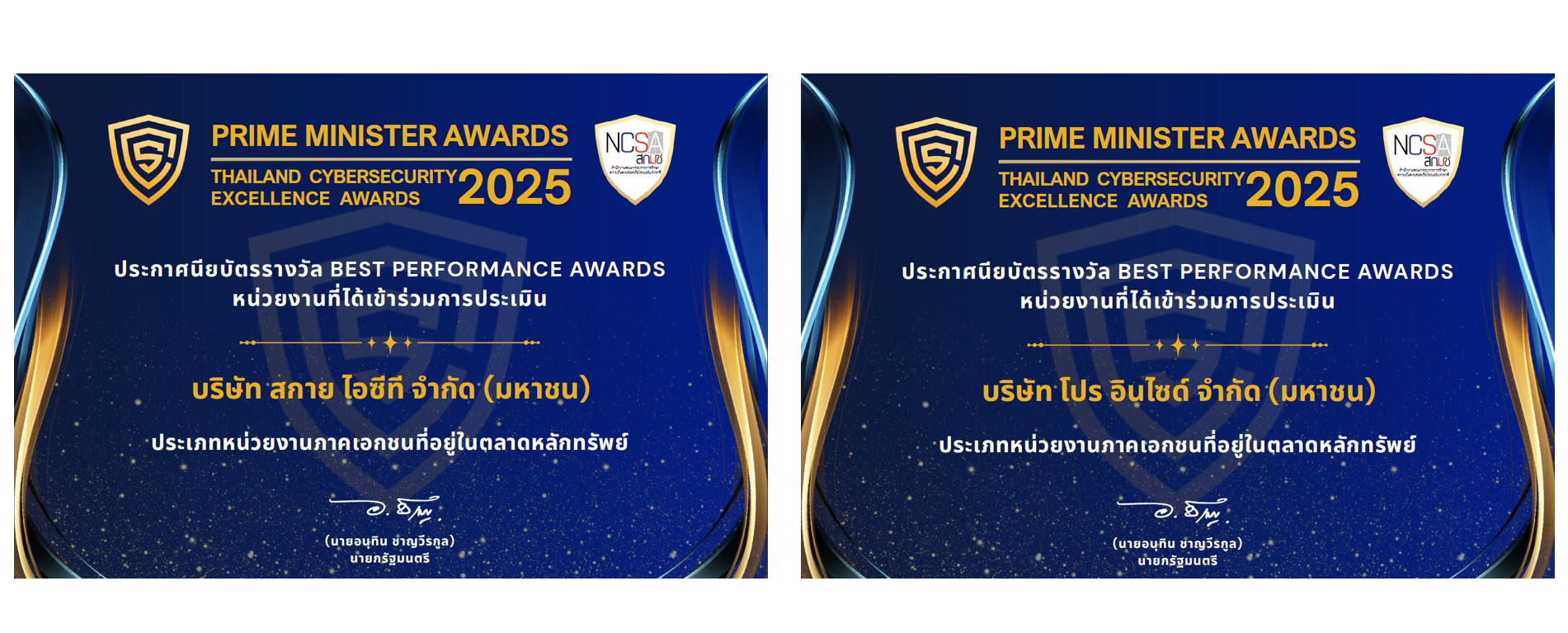
  • On 20 November 2025, the Company and PIS received the “Best Performance Awards in the category of Listed Private Sector Organizations” from the “Prime Minister Awards: Thailand Cybersecurity Excellence Awards 2025”, organized by the National Cyber Security Agency (NCSA).

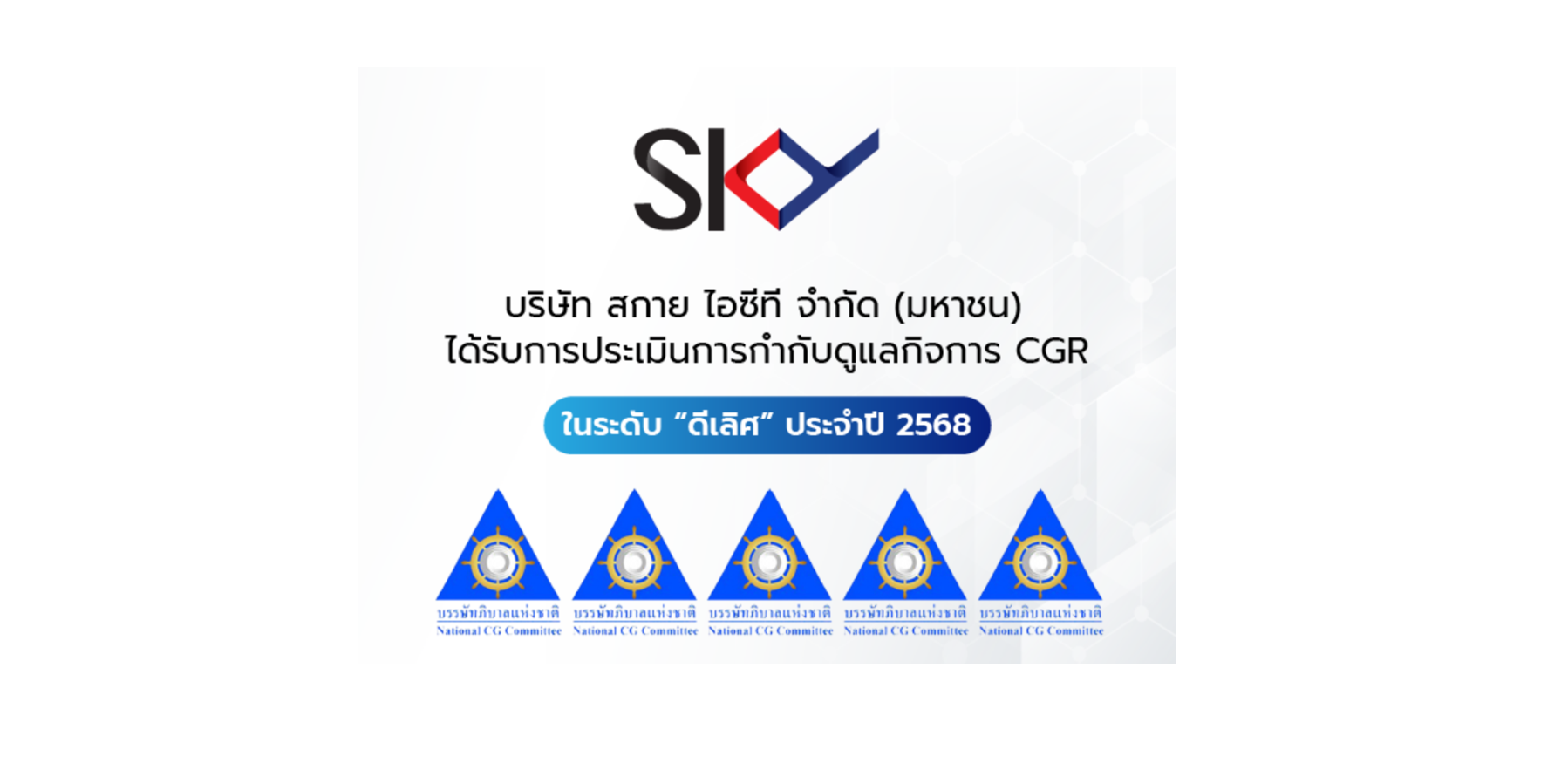
  • In 2025, the Company received a 5-star CGR rating (“Excellent”), the highest level under the Corporate Governance Report of Thai Listed Companies (CGR) 2025 assessment.

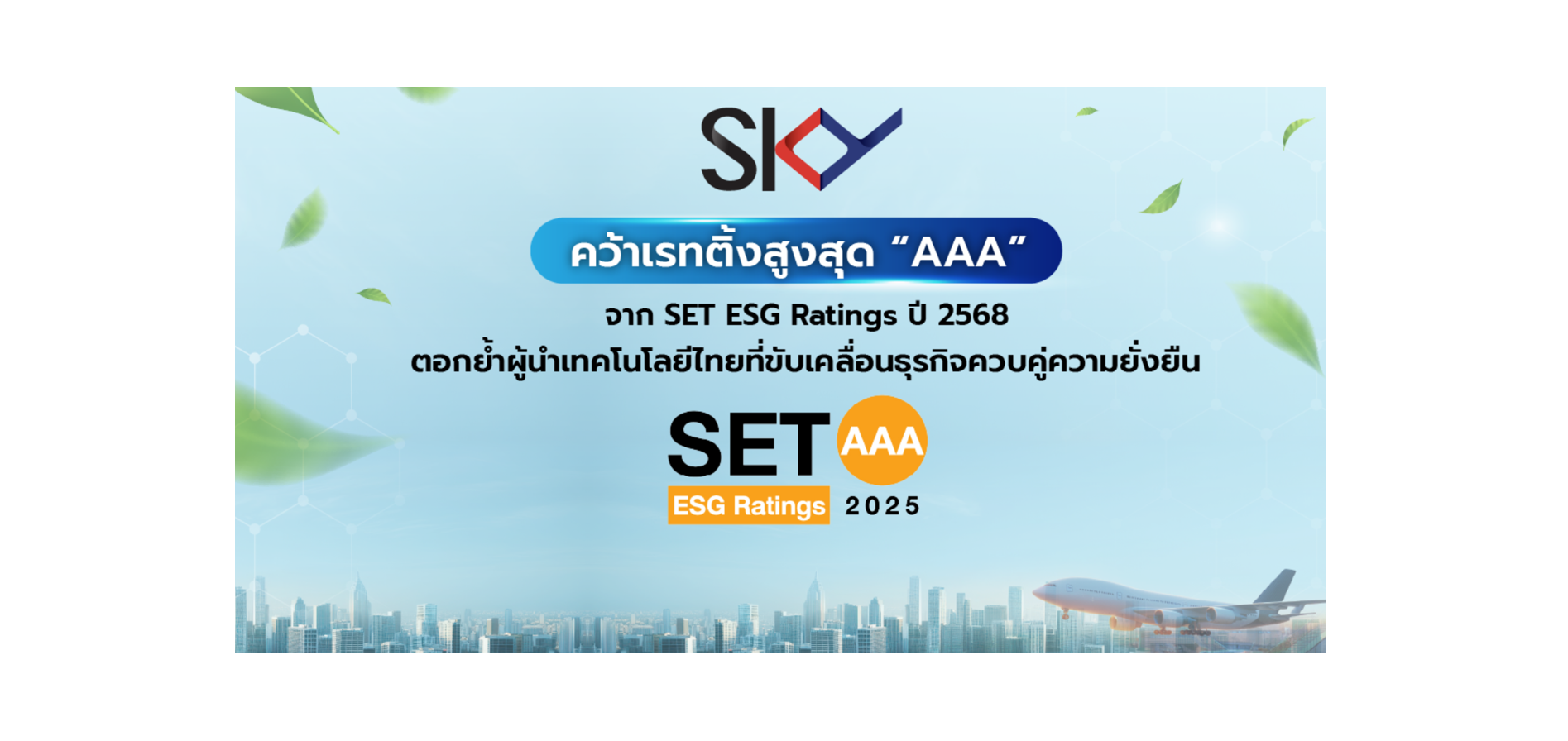
  • In 2025, the Company was awarded the highest “AAA” level in the SET ESG Ratings 2025 by the Stock Exchange of Thailand (SET). This recognition reflects the Company’s excellence in conducting business under a structured, transparent, and sustainable Environmental, Social, and Governance (ESG) framework, enhancing confidence among investors, financial institutions, and long-term investment funds.

Contents