

Risk Management · 2025
In this section4 topics
Risk Management Policy & Plan
Policy & Plan Description
The Company recognizes the importance of risk management amid both internal and external changes that may affect its business operations. The Company has adopted an Enterprise Risk Management (ERM) framework to oversee and manage risks, with reference to internationally recognized standards such as the COSO Enterprise Risk Management Framework, in order to ensure a systematic approach to risk identification, assessment, and management. This framework covers strategic, operational, financial, legal and regulatory compliance risks, as well as environmental, social, and governance (ESG) risks. The risk management process is carried out under the oversight of the Board of Directors and relevant board committees.
The Board of Directors has appointed a Risk Management Committee with the following key responsibilities:
Review and propose risk management policies and the organization's acceptable risk appetite.
Oversee the development of processes and compliance with the enterprise-wide risk management framework.
Review risk management reports to monitor significant risks.
The Risk Management Committee will assess the overall business situation, analyze both external and internal risks, as well as opportunities that may affect the achievement of the company's main objectives and stakeholders, in order to determine appropriate risk mitigation measures.
The Company focuses on managing risks adequately, appropriately, systematically, continuously, efficiently, effectively, for maximum benefit, and in alignment with the objectives set in the Company's operational plans, strategic plans, and business objectives.
Furthermore, risk management and internal controls are assessed by the internal audit department, which presents the assessment results to the Audit Committee and management to collaboratively identify approaches for preventing potential risks, as well as continuously monitoring and reviewing the assessment outcomes.
The Company has established a risk management policy, with the Risk Management Committee overseeing and monitoring risks according to the planned framework, with excellent cooperation and coordination from various relevant departments.
The Company also has a policy to develop its personnel to possess skills and adapt their work methods to keep pace with ever-changing technology, instill awareness, and emphasize the principles of organizational risk management, which is part of good corporate governance, a crucial foundation for achieving the organization's sustainable goals.
Policy Document Link
https://cms.skyict.co.th/wp-content/uploads/2025/12/SKY02-09-_-Risk-Management-Policy-_-13.11.25.pdf
Risk Factors — Overview
Risk Factors — Introduction
The risk report is prepared in accordance with GRI Standards guidelines and considers linkages with other relevant frameworks, such as UN SDGs and the Integrated Reporting concept, to comprehensively reflect sustainability performance.
Risks to the Company's Business Operations
Introduction
The Company places importance on considering risk factors and has established a joint risk management policy involving the Board of Directors, the Risk Management Committee, executives, and employees. Quarterly meetings are scheduled to identify and consider risk issues at the organizational and departmental levels to define risk management strategies that align with international guidelines and practices, covering both public and private sector business groups. The working committee operates under a risk management framework with clearly defined roles and responsibilities. Reports are submitted to the Risk Management Committee for consideration of potential impacts and opportunities, and to determine acceptable risk levels (Risk Appetite and Tolerance), including prevention methods, risk management, and risk mitigation measures. Subsequently, performance reports are presented to the Audit Committee and the Board of Directors for their acknowledgment and/or comments, respectively.
Non-compliance Management (Non-compliance Management)
The Company places importance on managing risks related to non-compliance with laws, regulations, and internal policies. It has established clear processes for receiving notifications, conducting investigations, and following up on all forms of non-compliance cases. This ensures that such risks can be managed systematically, transparently, and fairly when non-compliance incidents are reported or discovered. The Company will appoint responsible persons or relevant working committees to investigate facts, analyze causes, and determine corrective and preventive measures to avoid recurrence. The results of these actions will be continuously monitored until completion. Furthermore, the Company collects and reports the number of non-compliance cases or incidents that occurred during the reporting period. This information is presented to senior management and/or the Board of Directors to support risk assessment, internal control system improvement, and continuous enhancement of the organization's corporate governance.
Monitoring and Review of the Company's Code of Ethics Compliance (Ethics and Compliance Risk Management)
The Company prioritizes ethical risk management and compliance with good corporate governance principles by regularly monitoring adherence to the Company's practices and code of ethics. This is achieved through internal oversight processes, complaint mechanisms, and reports from relevant departments, ensuring timely identification, investigation, and management of incidents that may constitute non-compliance. The Company collects and records incidents of non-compliance with practices or the code of ethics (if any). These are analyzed to determine causes, assess risk levels, and establish corrective and preventive measures to avoid recurrence, forming part of the organization's risk management and internal control system improvement. Furthermore, the Company periodically reviews the effectiveness and suitability of its practices and code of ethics to ensure alignment with the business context, relevant laws and regulations, and emerging risks. The results of these reviews are utilized to improve governance guidelines and continuously foster an organizational culture committed to transparency and accountability.
Risk Register
| Risk Name | Risk Characteristics | Consequences | Management Measures | Related Risk Factors |
|---|---|---|---|---|
| Risk from reliance on major customers | The Company's revenue and operating performance may partly depend on a limited number of major customers. Such customers may account for a significant proportion of the Company's revenue or contract value. If major customers reduce their service usage, cancel or do not renew contracts, delay project implementation, or change business terms due to economic conditions, customers' business strategies, or any other factors, the Company may not be able to replace such revenue in the short term.
| Should such risks materialize, this could significantly reduce the Company's revenue and operating performance, impacting the Company's profitability, cash flow, and financial position. Furthermore, the volatility of revenue due to reliance on major customers may affect investor confidence and could cause the Company's securities value to fluctuate or decline.
| The Company recognizes the risk of over-reliance on major customers and has established measures to manage and mitigate the impact of such risks, as follows:
| 734 · Description: Reliance on large customers or few customers · Info category: STRATEGIC_RISK |
| Risks from technological changes and service diversification | The company's business operations rely on continuous technology and service development to maintain competitiveness. However, technology changes rapidly, and customer demands are diverse and constantly evolving. If the company fails to develop, improve, or select appropriate technologies and services in a timely manner to keep pace with these changes, it may result in the company's products or services being unable to effectively meet market demands.
| Should such risks materialize, the Company may lose its competitive advantage, market share, or business opportunities, and may also face increased technology investment costs without generating the expected returns, which could impact its operating performance, financial position, and its ability to generate returns for shareholders.
| The Company recognizes the risks arising from technological changes and service diversification and has established measures to manage and mitigate the impact of such risks, as follows:
| 738 · Description: Reliance on employees in key positions · Info category: OPERATIONAL_RISK · 732 · Description: Changes in technologies · Info category: STRATEGIC_RISK · 743 · Description: Product obsolescence · Info category: OPERATIONAL_RISK |
| Risk of Cybersecurity Law Violation | The Company's business operations utilize information technology systems and digital systems for operations and service provision, which must comply with laws, regulations, and requirements related to cybersecurity and data protection. However, cybersecurity laws and standards are continuously changing and evolving. If the Company is unable to fully comply with such laws or requirements, or if a cybersecurity incident occurs, the Company may face risks arising from violations of relevant laws.
| Should there be a violation of cybersecurity laws, the Company may be held legally liable, subject to penalties, fines, or lawsuits, and may also suffer damage to its reputation, customer and partner trust, which could impact the Company's operating results, financial position, and cash flow.
| The Company recognizes the risks associated with cybersecurity law violations and has implemented measures to manage and mitigate the impact of such risks, as follows:
| 758 · Description: Violations of laws and regulations · Info category: COMPLIANCE_RISK |
| Risk of lawsuits due to personal data breaches | The company's business operations involve the collection, use, and disclosure of personal data of customers, partners, and personnel, which must comply with laws and regulations related to personal data protection. However, in the event of a personal data breach, unauthorized data access, or data management that does not comply with the law, the company may face risks of lawsuits or claims for damages from affected parties, as well as investigations or legal proceedings by regulatory authorities.
| Should such risks materialize, the Company may be held legally liable, be required to pay damages, or be subject to administrative penalties, which could impact its operational performance, financial position, and cash flow. Furthermore, such events could damage its reputation and the trust of customers and investors, and impact its long-term business sustainability.
| The Company acknowledges the risk of lawsuits arising from personal data breaches and has established measures to manage and mitigate the impact of such risks, as follows:
| 1723 · Description: Legal risk · Info category: COMPLIANCE_RISK · 736 · Description: Damage to company image and reputation · Info category: STRATEGIC_RISK |
| Fraud risk in company operations | The company's business operations involve operational processes, procurement, project management, and coordination with business partners and relevant agencies, which may create opportunities for corruption, abuse of power, or actions that do not comply with laws and business ethics. Should internal controls prove insufficient, the company may face risks arising from operational corruption.
| Should instances of corruption occur in operations, the Company may suffer financial damage, loss of resources, or be subject to claims for damages, and may also face legal proceedings or penalties under the law. Furthermore, such incidents could impact its reputation, credibility, and the trust of customers, partners, and investors, which could adversely affect the Company's securities value and its long-term business operational capabilities. | The Company prioritizes the prevention and anti-corruption efforts in its operations and has established measures to manage and mitigate such risks as follows:
| 758 · Description: Violations of laws and regulations · Info category: COMPLIANCE_RISK · 741 · Description: Systems or internal control system · Info category: OPERATIONAL_RISK · 759 · Description: Corporate Governance · Info category: COMPLIANCE_RISK · 1723 · Description: Legal risk · Info category: COMPLIANCE_RISK · 736 · Description: Damage to company image and reputation · Info category: STRATEGIC_RISK · 1717 · Description: ESG risk · Info category: STRATEGIC_RISK |
| Risk of failure to deliver work as per contract or to perform according to SLA. | The company's business operations involve the provision of services and the execution of projects under contractual terms and Service Level Agreements (SLA) with clients. These agreements specify the scope of work, duration, service quality, and performance indicators. However, should the company be unable to deliver work or provide services in accordance with the agreed terms, owing to resource constraints, project management issues, operational system limitations, or events beyond its control, this could result in risks of contract breach or non-compliance with the SLA.
| Should such risks materialize, the Company may be subject to fines, compensation for damages, or be compelled to undertake additional corrective work without being able to charge for the expenses. This could impact its operating results, financial position, and cash flow. Furthermore, it could affect customer confidence and satisfaction, as well as the Company's reputation.
| The Company has established measures to manage and mitigate risks arising from the inability to deliver work according to the contract or non-compliance with Service Level Agreements (SLAs), by closely monitoring project progress and performance, with regular monitoring of the operational plan through the Project Tracking system. The Company monitors the project's operational plan weekly through the Project Tracking system to control progress, timeline, and work quality to align with the plan and contractual terms, as well as to identify problems and implement timely solutions, thereby reducing risks from non-compliance with SLAs. | 739 · Description: Shortage or reliance on skilled workers · Info category: OPERATIONAL_RISK · 741 · Description: Systems or internal control system · Info category: OPERATIONAL_RISK · 742 · Description: Human error in business operations · Info category: OPERATIONAL_RISK · 1723 · Description: Legal risk · Info category: COMPLIANCE_RISK · 746 · Description: Delays in the development of future projects · Info category: OPERATIONAL_RISK |
| Risk of losing key personnel in critical operational functions | The company's business operations rely on personnel with knowledge, expertise, and specialized experience in certain areas, who play a crucial role in project management, service provision, and business development. If the company is unable to retain such personnel or experiences the loss of key personnel simultaneously, this could result in risks to operational continuity, as well as limit the company's ability to undertake new projects or expand existing ones.
| Should such risks materialize, they may result in the Company's operations being delayed, not proceeding according to plan, or failing to achieve the established business objectives, which could impact the Company's revenue, operational performance, and competitiveness.
| The Company has established measures to manage and mitigate the risk of losing personnel in critical operational areas, focusing on ensuring human resource continuity through Continuous selection and development of high-potential personnel (Talent) which the Company has continuously selected and developed high-potential personnel to participate in various projects to enhance workforce readiness and transfer knowledge in critical areas, thereby reducing the risk of over-reliance on a few key individuals and supporting the Company's operations to achieve its defined objectives. | 738 · Description: Reliance on employees in key positions · Info category: OPERATIONAL_RISK · 739 · Description: Shortage or reliance on skilled workers · Info category: OPERATIONAL_RISK |
| Credit Risk | The company's business operations involve providing services and selling products with credit payment terms to customers, which results in the company having trade receivables as a normal part of its operations. However, if debtors are unable to make payments on time or if payments are delayed, this could lead the company to face liquidity risk and increased risk from setting aside provisions for doubtful accounts.
| Should debtor risk materialize, it may lead to a decrease in the company's cash flow, affecting liquidity and operational capability, and potentially impacting operating results and financial position due to the recognition of expenses from the provision for doubtful accounts.
| The Company has established measures to manage and mitigate accounts receivable risks, emphasizing credit control and payment monitoring. Systematic credit checks and accounts receivable monitoring The Company requires a credit check for all customers before extending credit, considering their financial standing and payment history to ensure appropriate credit levels. Additionally, the Finance Manager will regularly monitor overdue accounts receivable beyond the credit terms each month and report to the Chief Financial Officer (CFO), along with preparing a summary report detailing the reasons for delays in each case, to enable management to track and determine appropriate solutions. | 763 · Description: Default on payment or exchange of goods · Info category: FINANCIAL_RISK |
| Asset and Liability Management Risk | The company's business operations involve the management of assets and liabilities in accordance with its capital structure, cash flow, and financial obligations at each period. However, if the company is unable to manage its assets and liabilities appropriately with respect to maturity, interest rates, or liquidity, it may lead to financial risks and affect the company's ability to repay debts and its operations.
| Should risks in asset and liability management materialize, the company may experience liquidity problems, incur increased financial costs, or be unable to repay debts as scheduled. This could impact its financial position, creditworthiness, and investor confidence, and may also limit its ability to expand its business or invest in new projects in the future.
| The company has established measures to manage and reduce asset and liability management risks, by focusing on maintaining liquidity and financial stability. Cash flow planning and close monitoring of debt obligations The company plans its cash flow in advance to align with debt obligations at each period, along with establishing reserve limits to mitigate liquidity risks. It closely monitors and evaluates interest rate changes to inform funding decisions, and regularly reviews and monitors loan covenants to ensure continuous compliance with financial requirements and to reduce the risk of default.
| 761 · Description: Insufficient sources of funding · Info category: FINANCIAL_RISK · 762 · Description: Change in financial and investment policies of financial institutions that affect business operations · Info category: FINANCIAL_RISK · 1724 · Description: Liquidity risk · Info category: FINANCIAL_RISK |
| Risk from foreign currency exchange rate fluctuations | The Company's business operations involve certain receipts and payments in foreign currencies, and may also include investments or contracts related to foreign currencies. This exposes the Company to risks from exchange rate fluctuations. Should exchange rates change unfavorably, it could impact the revenue, costs, or financial value of such transactions.
| Should the risk of exchange rate fluctuations arise, it may cause the company's operating performance and financial position to fluctuate due to the recognition of foreign exchange gains or losses, and may also affect cash flow and cost management capabilities.
| The Company has established measures to manage and reduce risks from foreign exchange rate fluctuations by utilizing appropriate financial instruments, as follows:
| 764 · Description: Fluctuation in exchange rates, interest rates, or the inflation rate · Info category: FINANCIAL_RISK |
| Risk of errors from substandard service or inaccurate information from partners. | The company's business operations depend on services, data, or systems provided by certain business partners and external service providers to support its operations and customer service. However, if these partners fail to deliver services according to agreed standards, or provide inaccurate, incomplete, or untimely information, such risks could prevent the company from fulfilling contractual obligations or Service Level Agreements (SLAs) with customers. This could result in financial losses, additional costs for problem resolution, or claims for damages. Moreover, it could adversely affect the company's reputation, customer and investor confidence, and the long-term investment value for shareholders, potentially leading to operational errors or an inability to provide efficient services to customers.
| Should such risks materialize, the company may be unable to comply with contractual terms or Service Level Agreements (SLAs) with customers, potentially resulting in financial damages, additional costs for problem resolution, or claims for compensation.
| The Company has established measures to manage and reduce risks arising from substandard service errors or inaccurate data from business partners, as follows:
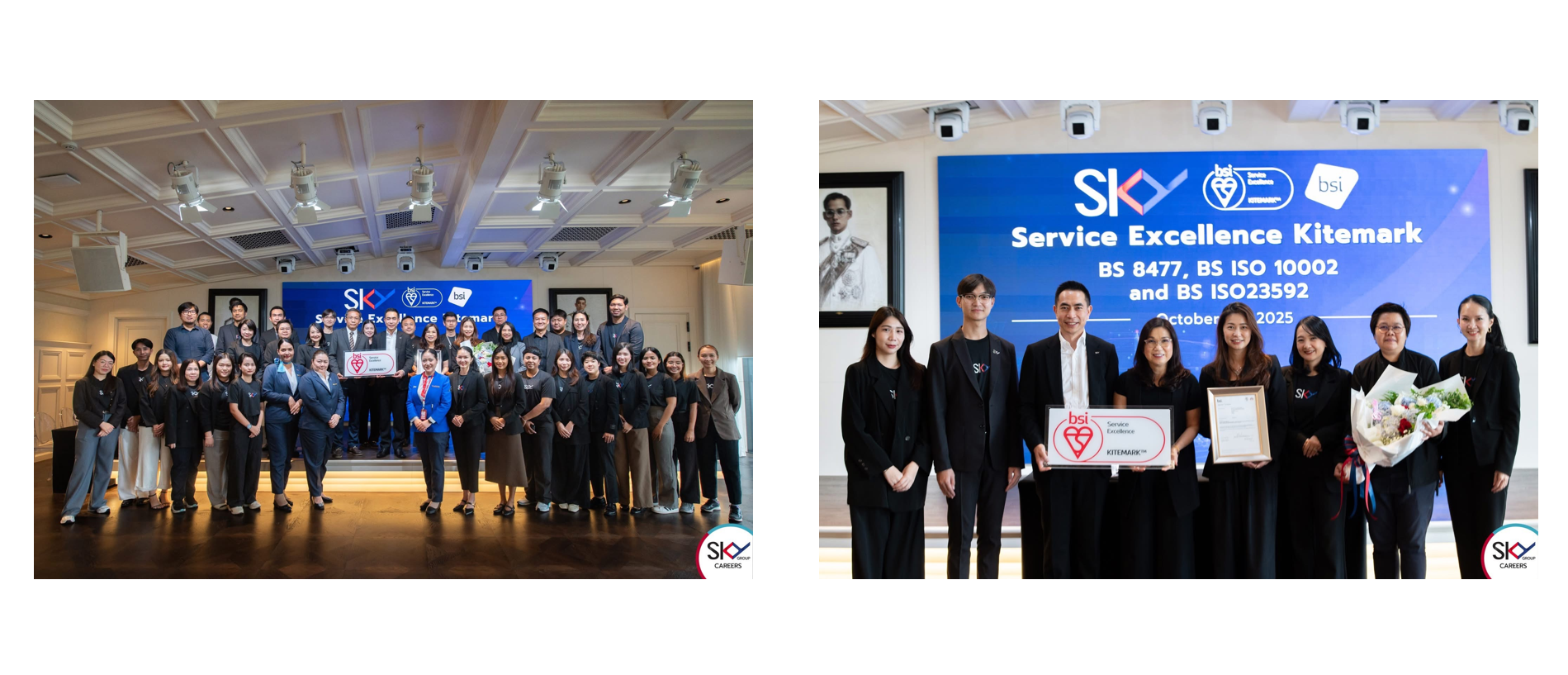
To enhance service standards and systematically improve complaint management, the Company received international certifications in October 2025, namely (1) BS ISO 23592:2021 – Service Excellence Kitemark (2) BS ISO 10002:2018 – Customer satisfaction and complaints management and (3) BS 8477:2014 – Code of Practice for Customer Service Such certification reflects the Company's commitment to maintaining service quality standards, managing complaints, and effectively communicating with service users, which helps support the reduction of risks from service errors and impacts on the Company's reputation.
| 1723 · Description: Legal risk · Info category: COMPLIANCE_RISK · 736 · Description: Damage to company image and reputation · Info category: STRATEGIC_RISK |
| Risk from the number of complaints regarding services not complying with agreements | The company's business operations involve providing services to customers under contractual terms and Service Level Agreements (SLAs), which define service standards, quality, and delivery timelines. However, if the services do not comply with these agreements, it may lead to an increase in customer complaints, reflecting risks related to service quality and the company's operational management.
| If the number of complaints significantly increases, the company may incur additional expenses for problem resolution, compensation, or contractual penalties, as well as potentially affecting its reputation, customer trust, and its ability to retain existing customers or secure new projects.
| The Company has established measures to manage and reduce risks arising from the number of complaints regarding services not complying with agreements, focusing on enhancing service quality and systematic follow-up, as follows:
| 1723 · Description: Legal risk · Info category: COMPLIANCE_RISK · 736 · Description: Damage to company image and reputation · Info category: STRATEGIC_RISK |
| Risk of service provider's internet system unavailability | The Company's business operations are reliant on external internet network systems and communication infrastructure from third-party service providers to continuously support its services, operations, and various system interconnections. Nevertheless, any disruption or unavailability of internet services from these providers could lead to an interruption in the Company's operations or an inability to deliver services to customers as per normal.
| Should such risks materialize, it could result in the Company being unable to provide services in accordance with agreements or Service Level Agreements (SLAs) with customers, leading to operational delays or the loss of business opportunities. Furthermore, it may adversely affect revenue, reputation, and the confidence of both customers and investors.
| The Company has established measures to manage and mitigate risks arising from the internet service provider's inability to provide services, focusing on maintaining business continuity through The provision of a backup internet system and automatic failover The Company has implemented a backup internet system and configured the system to automatically switch operations promptly in the event of a disruption from any single service provider, to ensure continuous operations and service provision, and to minimize potential impacts. | 1720 · Description: System disruption risk · Info category: OPERATIONAL_RISK |
| Risk arising from the continuous decrease in the annual number of partners who meet standard criteria (Grade A or higher). | The Company's business operations rely on partners and business alliances that meet quality standards, service provision, and compliance with the conditions set by the Company. However, if the number of partners meeting standard criteria at level A or above continuously decreases, it may reflect limitations in partner selection or changes in partner capabilities, which could affect the continuity and quality of the Company's operations.
| Should such risks materialize, it may result in the Company facing limitations in partner selection, leading to increased costs or operational delays. Furthermore, it could potentially impact the quality of services and the ability to comply with customer agreements.
| The Company has established measures for managing risks arising from a continuous decrease in the number of partners meeting standard criteria, by prioritizing systematic assessment and monitoring of partner risks, as follows:
| 733 · Description: Business operations of partners in the supply chain · Info category: STRATEGIC_RISK |
| Risk arising from partners' inability to deliver goods on schedule, affecting the supply chain. | The Company faces risks due to partners' inability to deliver goods, materials, equipment, or services within the agreed-upon timeframe in the contract. This may arise from production capacity limitations, logistics issues, force majeure events, or other external factors. Such delays could lead to disruptions in the Company's supply chain and impact overall operational plans.
| Should such risks materialize, the Company may be unable to operate or deliver work to customers within the stipulated timeframe, leading to additional costs from procuring substitute goods or services, adjusting operational plans, or urgent management. This could also affect the confidence of customers and partners, and impact the Company's performance and competitiveness in the long term.
| The Company has established measures to manage the risk of partners failing to deliver goods on time, which could impact the Company's supply chain, as follows:
| 733 · Description: Business operations of partners in the supply chain · Info category: STRATEGIC_RISK · 1714 · Description: Competition risk · Info category: STRATEGIC_RISK |
| Risks from the use of illegal labor (child labor, forced labor) | The company conducts its business by relying on labor both within the company and from external partners/service providers to support its operations and services. The use of illegal labor, such as child labor or forced labor, could pose legal, regulatory, and social standard risks, as well as impact supply chain management.
| Should such risks materialize, the Company may face legal claims, penalties, or suspension of business activities. Furthermore, it may impact the Company's reputation, the confidence of customers, partners, and investors, and potentially affect its operational capabilities.
| The company has established measures to manage and reduce the risks of illegal labor practices, focusing on compliance with labor laws, human rights, and systematic human resource management, as follows:
| 758 · Description: Violations of laws and regulations · Info category: COMPLIANCE_RISK · 1723 · Description: Legal risk · Info category: COMPLIANCE_RISK · 1717 · Description: ESG risk · Info category: STRATEGIC_RISK · 753 · Description: Impact on human rights · Info category: OPERATIONAL_RISK |
| Occupational safety risks for employees | The Company operates in a working environment with safety risks arising from equipment, work processes, and workplaces. Without proper control or management, this could lead to accidents, injuries, or damage to employees' lives and property.
| Should safety risks arise, the company may face legal issues, compensation claims, or damage its reputation regarding employee welfare. Furthermore, it may affect operational efficiency and the retention of skilled employees.
| The Company has established measures to manage and reduce occupational safety risks for employees, focusing on systematic compliance with laws and safety standards, as follows:
| 749 · Description: Safety, occupational health, and working environment · Info category: OPERATIONAL_RISK · 753 · Description: Impact on human rights · Info category: OPERATIONAL_RISK |
| Risk of insufficient labor or a shortage of skilled labor for existing projects and potential future projects. | The Company undertakes both current projects and potential future projects, which require skilled labor and specialized expertise. If there is insufficient labor or a lack of skilled personnel, the Company may not be able to operate according to plan, affecting operational efficiency and the achievement of project objectives.
| Should such risks materialize, they may result in project delays, increased costs, or reduced work quality. Furthermore, they may also affect the ability to secure new projects, build customer confidence, and impact the company's financial stability.
| The Company has established measures to manage and mitigate the risks of insufficient labor or a shortage of skilled labor for ongoing and future projects, as follows:
| 739 · Description: Shortage or reliance on skilled workers · Info category: OPERATIONAL_RISK · 742 · Description: Human error in business operations · Info category: OPERATIONAL_RISK · 746 · Description: Delays in the development of future projects · Info category: OPERATIONAL_RISK · 753 · Description: Impact on human rights · Info category: OPERATIONAL_RISK |
| The risk of increased demand for environmentally friendly products/services may affect the existing business direction following an incident. | The Company operates its business with core products and services in accordance with the business direction set by the Company. However, market demand for environmentally friendly products or services is rapidly increasing. If the Company fails to adapt or develop products and services in line with this trend, its existing business may not adequately meet the needs of customers and the market.
| Should such risks materialize, this could result in the Company losing business opportunities as customers and the market shift their interest towards environmentally friendly products or services. Furthermore, it could impact revenue, competitiveness, and investor confidence. It may also necessitate an urgent adjustment of the Company's existing business direction to align with market demands and sustainability trends.
| The company has established measures to manage and mitigate risks arising from the demand for environmentally friendly products and services, focusing on developing products and services that align with market sustainability trends, as follows:
These measures enable the company to adapt to market demand trends, reduce the risk of losing business opportunities, and enhance sustainability for the business and investors. | 733 · Description: Business operations of partners in the supply chain · Info category: STRATEGIC_RISK · 734 · Description: Reliance on large customers or few customers · Info category: STRATEGIC_RISK · 746 · Description: Delays in the development of future projects · Info category: OPERATIONAL_RISK · 1714 · Description: Competition risk · Info category: STRATEGIC_RISK · 1717 · Description: ESG risk · Info category: STRATEGIC_RISK |
| Risks from flooding affecting airport access, resulting in service disruption. | The Company operates services in the airport area, which may be affected by floods, natural disasters, or extreme weather conditions, causing disruption to the Company's access to the area and its services, or inability to operate as usual.
| Should such risks materialize, the company may be unable to provide services in accordance with agreements or within the specified timeframe, leading to operational delays, increased costs from emergency management, and potential impacts on customer and partner confidence. Furthermore, it could affect the company's revenue, operating results, and competitiveness.
| The Company has established measures to manage and mitigate risks arising from floods or natural disasters affecting access to the airport and service provision, as follows:
| 1719 · Description: Climate change and disasters · Info category: STRATEGIC_RISK |
| Risk of the company incurring expenses for the repair or replacement of service equipment in the event of damage due to climate change. | The Company conducts its business by utilizing equipment and tools to provide services to customers. Changes in climate conditions, such as heavy rainfall, storms, or force majeure events, may cause damage to this equipment and these tools. This results in the Company incurring expenses for repairing or replacing the equipment to ensure continuous service delivery.
| Should such risks materialize, this could result in the Company incurring increased costs from repairing or replacing equipment, and may also lead to delays in service provision or an inability to provide services as per agreements. Recurrent incidents could impact the Company's operating results and reputation.
| The company has established measures to manage and mitigate risks from damage to service equipment caused by climate change, by procuring insurance for service equipment damage. The company insures the equipment and tools used in providing services, with coverage designed to encompass risks from natural disasters such as floods, storms, or other force majeure events. This ensures that the company can repair or replace equipment promptly, thereby mitigating impacts on operations and service continuity.
| 761 · Description: Insufficient sources of funding · Info category: FINANCIAL_RISK · 1724 · Description: Liquidity risk · Info category: FINANCIAL_RISK · 1717 · Description: ESG risk · Info category: STRATEGIC_RISK · 1719 · Description: Climate change and disasters · Info category: STRATEGIC_RISK |
| Risk arising from malicious actors utilizing AI as a tool to attack critical information systems, leading to service unavailability. | This is an emerging risk in 2025. The company operates by relying on information systems and digital technology to provide services to customers. Attacks on information systems by malicious actors using AI or automated techniques may cause system malfunctions, interference, or inability to provide normal services, which constitutes a cybersecurity risk.
| Should such risks materialize, the Company may be unable to provide services as per agreements, increasing costs for system recovery and prevention of recurrent attacks, and potentially impacting the confidence of customers, partners, and investors. Furthermore, the damage could affect financial performance and reputation.
| The Company has established measures to manage and reduce risks from AI-powered information system attacks, focusing on prevention, detection, and raising employee awareness, as follows:
| 758 · Description: Violations of laws and regulations · Info category: COMPLIANCE_RISK · 732 · Description: Changes in technologies · Info category: STRATEGIC_RISK · 1723 · Description: Legal risk · Info category: COMPLIANCE_RISK · 744 · Description: Information security and cyber-attack · Info category: OPERATIONAL_RISK |
| Risk of employees being deceived by Deep Fake technology, impacting organizational confidence or leading to financial loss. | is an emerging risk in 2025. The company conducts its business by relying on digital communication and operations. Employees may be enticed or deceived by technology. Deep Fake such as forging voices or video images to order money transfers, causing damage to the company's finances or critical data, which poses an organizational security risk.
| Should such risks materialize, the company may incur financial losses, suffer a breach of critical organizational data, or experience reputational damage in the eyes of customers, partners, and investors. Furthermore, it could impact operational stability and financial performance.
| The company has established measures to manage and mitigate the risk of employees being deceived by Deep Fake technology, focusing on raising awareness and enhancing operational security, as follows:
| 761 · Description: Insufficient sources of funding · Info category: FINANCIAL_RISK · 758 · Description: Violations of laws and regulations · Info category: COMPLIANCE_RISK · 741 · Description: Systems or internal control system · Info category: OPERATIONAL_RISK · 759 · Description: Corporate Governance · Info category: COMPLIANCE_RISK · 732 · Description: Changes in technologies · Info category: STRATEGIC_RISK · 744 · Description: Information security and cyber-attack · Info category: OPERATIONAL_RISK · 1724 · Description: Liquidity risk · Info category: FINANCIAL_RISK · 736 · Description: Damage to company image and reputation · Info category: STRATEGIC_RISK |
Risks to Securities Holders' Investment
Risk Register
| Risk Name | Risk Characteristics | Consequences | Management Measures | Related Risk Factors |
|---|---|---|---|---|
| Investment Risk for Securities Holders | Investment in the company's securities carries risks associated with market conditions and various factors that may change. These include internal and external factors such as the overall economic situation, competitive landscape, changes in relevant laws and regulations, government policies, as well as the company's operating performance and financial position. Consequently, these factors may result in investment returns not meeting investors' expectations.
| Such risks may cause volatility in the company's securities prices. Security holders may not receive the expected returns or may lose part or all of their investment. Furthermore, changes in various related factors may affect investor confidence, the value of the securities, and the trading liquidity of the company's securities.
| The Company recognizes the potential risks to shareholders' investments and has established measures to manage and mitigate the impact of such risks, as follows:
| 768 · Description: Return from investment of securities holder · Info category: HOLDER_RISK |